
This post contains affiliate links. As an Amazon associate I earn qualifying purchases. Click here for more about this policy.
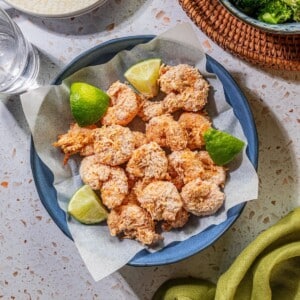
These Baked Coconut Shrimp taste just as good as fried shrimp, but are better for you and have fewer calories. They are gluten-free, grain-free, and great for those who follow a Paleo lifestyle, but tasty enough everyone else will enjoy them too!
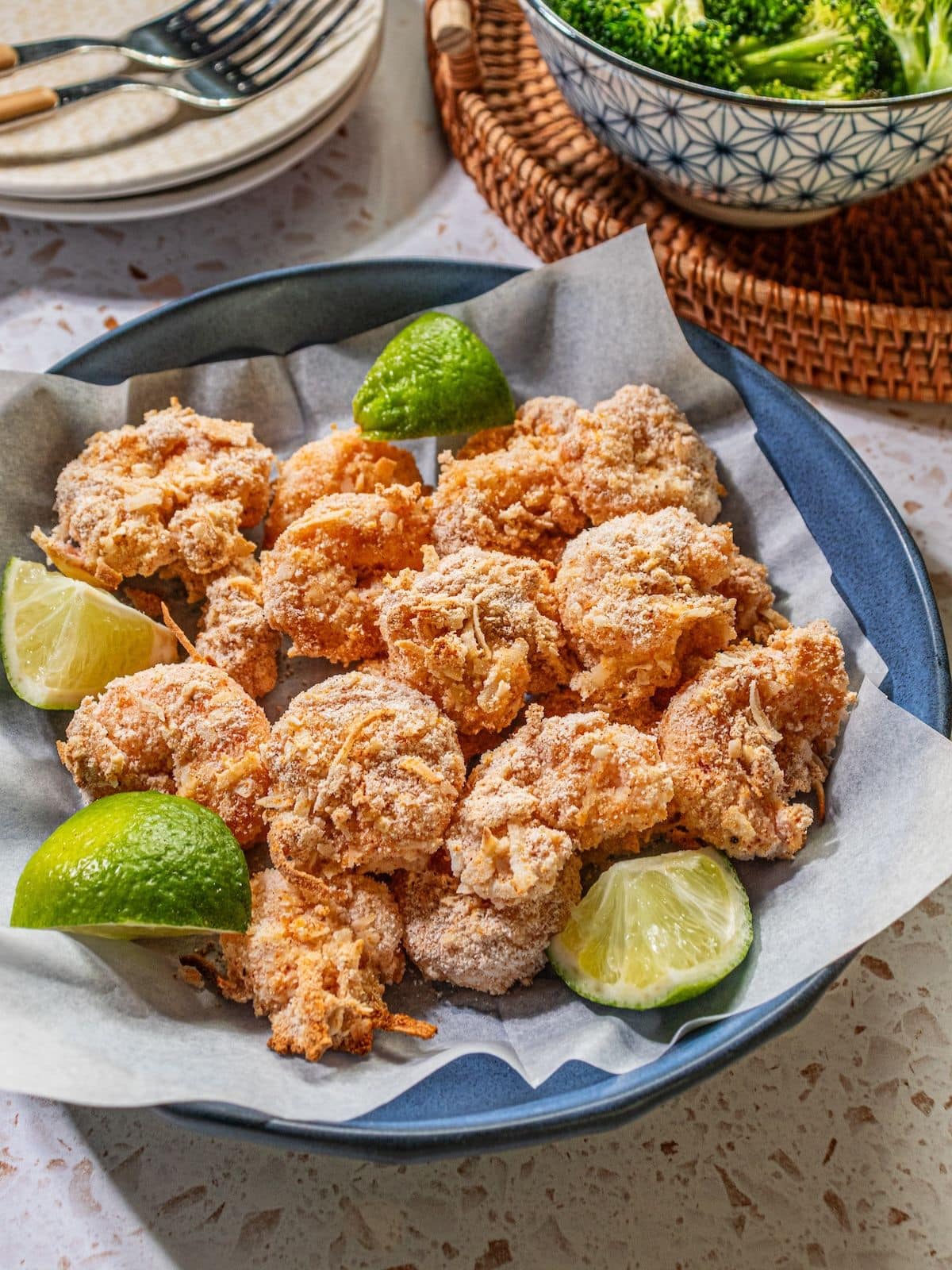
This baked coconut shrimp recipe uses coconut flour instead of Panko or other flours because it has a high fiber content and a lower glycemic index. The 6 grams of fiber, paired with over 14 grams of protein, and less than 180 calories per serving, make for a healthy recipe that will keep you feeling satisfied for longer.
The crunch on these gluten-free coconut shrimp won’t have you missing the fried version. The Cajun-inspired seasoning also provides a savory and slightly spicy kick that’s different from other coconut shrimp dishes.
If you like recipes with crunch that are baked instead of fried, you will love my oven- fried salmon and air-fried buffalo chicken bites!
Why You’ll Love This Recipe
- Low-Hassle, Only 15 Minutes: Skip dealing with messy oil and grease splatters and make crunchy coconut shrimp in the oven instead. Not only is baking better for you, but it takes only 15 minutes and is less complicated with less cleanup.
- Cajun Seasoned: Many coconut shrimp recipes are sweet, but this one uses unsweetened coconut and Cajun-style seasonings, like paprika and cayenne pepper. The result is a more savory and slightly spicy dish that’s perfect for those who don’t like sweet shrimp.
- High Fiber and Low-Calorie: This recipe uses coconut flour and shredded coconut in the “breading,” so it is higher in fiber. Plus, using egg whites versus whole eggs lowers the calories while still providing extra protein.
Table of Contents
Ingredients
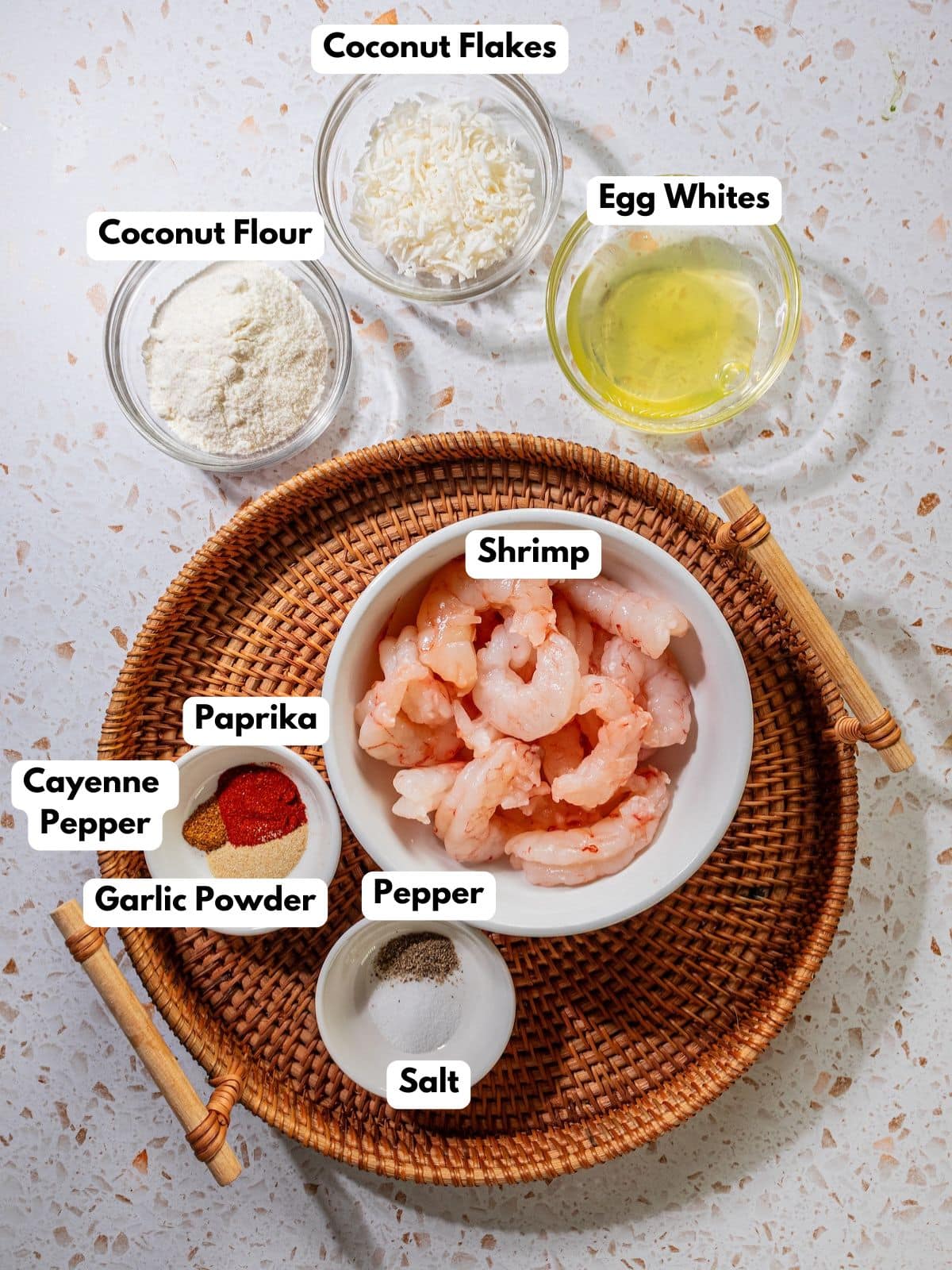
- Shrimp: Use peeled and deveined shrimp with the tails removed for this recipe. Then you can eat the whole shrimp in one bite without fussing with the tails.
- Egg: Instead of a whole egg, this recipe uses an egg white to help the breading stick to the shrimp. Egg whites have fewer calories than a whole egg but are still a great source of protein.
- Coconut Flour: This grain-free flour is high in fiber and fiber is great for your digestive health. It helps you feel full for a longer time and keeps blood sugar better balanced.
- Shredded Coconut: Use unsweetened shredded coconut flakes to avoid making the shrimp too sweet. Coconut is full of fiber and is fiber is good for lowering cholesterol. It’s also a source of fat, which is needed in balance with protein and fiber to ensure a balanced diet.
- Cajun Seasoning: Instead of the typical sweet coconut shrimp, this recipe uses savory and Cajun-inspired seasonings like garlic, paprika, and cayenne.
See the recipe card below for exact ingredient amounts, nutritional information, and detailed instructions.
Variations & Dietary Modifications
- Make It a Little Sweeter: If you really prefer sweeter coconut shrimp, you can use a blend of sweetened and unsweetened coconut flakes in your breading. Also, finish the shrimp with a drizzle of honey or hot honey over the top.
- Try Them Cheesy: Make Parmesan-crusted coconut shrimp by adding grated Parmesan to the coconut flour. You could also use Italian seasoning instead of paprika and cayenne for a more Italian flavor that would taste amazing served with a side of pesto zucchini noodles.
- Give Them a Citrus Flair: Have your coconut shrimp take you on a tropical vacation and add a bit of lime or orange zest to the breading. The coconut and citrus taste like the shrimp you’d eat on vacation.
How to Make Baked Coconut Shrimp
This oven-baked coconut shrimp has all the crunch of fried shrimp, but it’s better for you. Plus, baking shrimp makes dinner preparation less of a hassle. You’ll need to preheat your oven to 350°F before you start cooking.
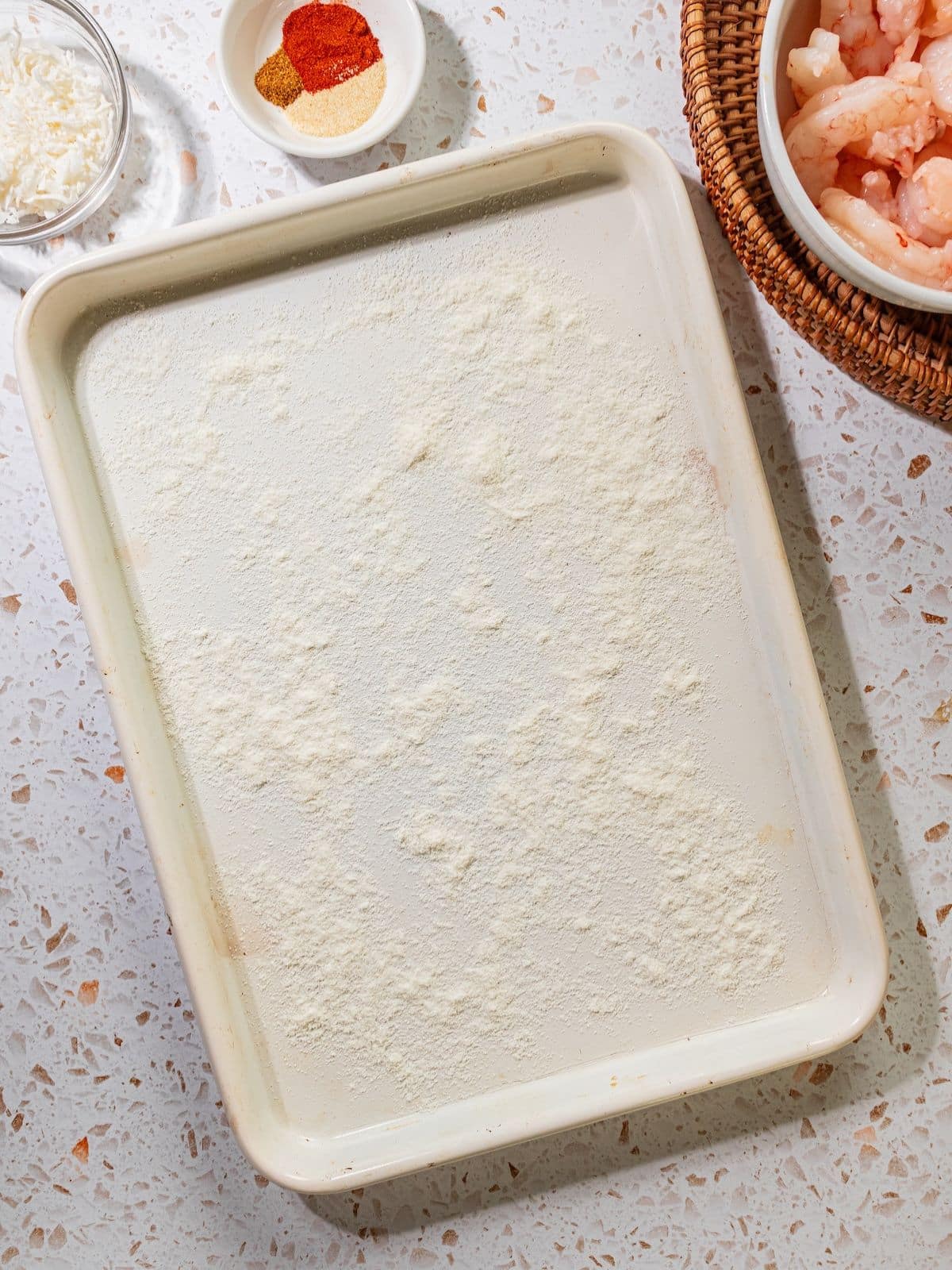
- Step 1: Dust the Pan with Flour. Prepare a nonstick baking sheet by dusting it with a light layer of coconut flour. This helps ensure the bottom of the shrimp stays breaded.
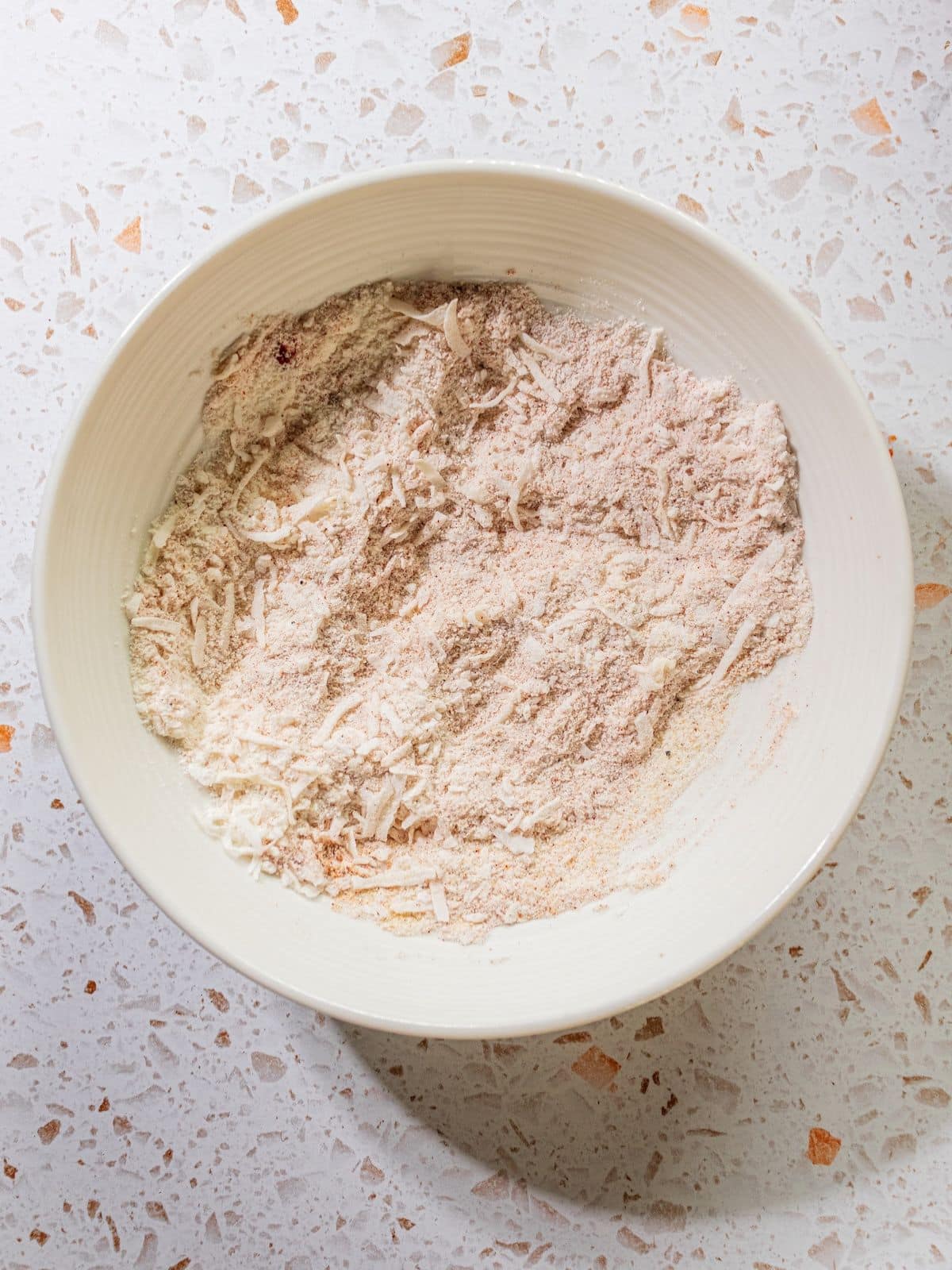
- Step 2: Mix the Breading. Sift the coconut flour into a bowl, then add the shredded coconut, garlic powder, paprika, and cayenne pepper. Whisk them together until they are thoroughly combined.
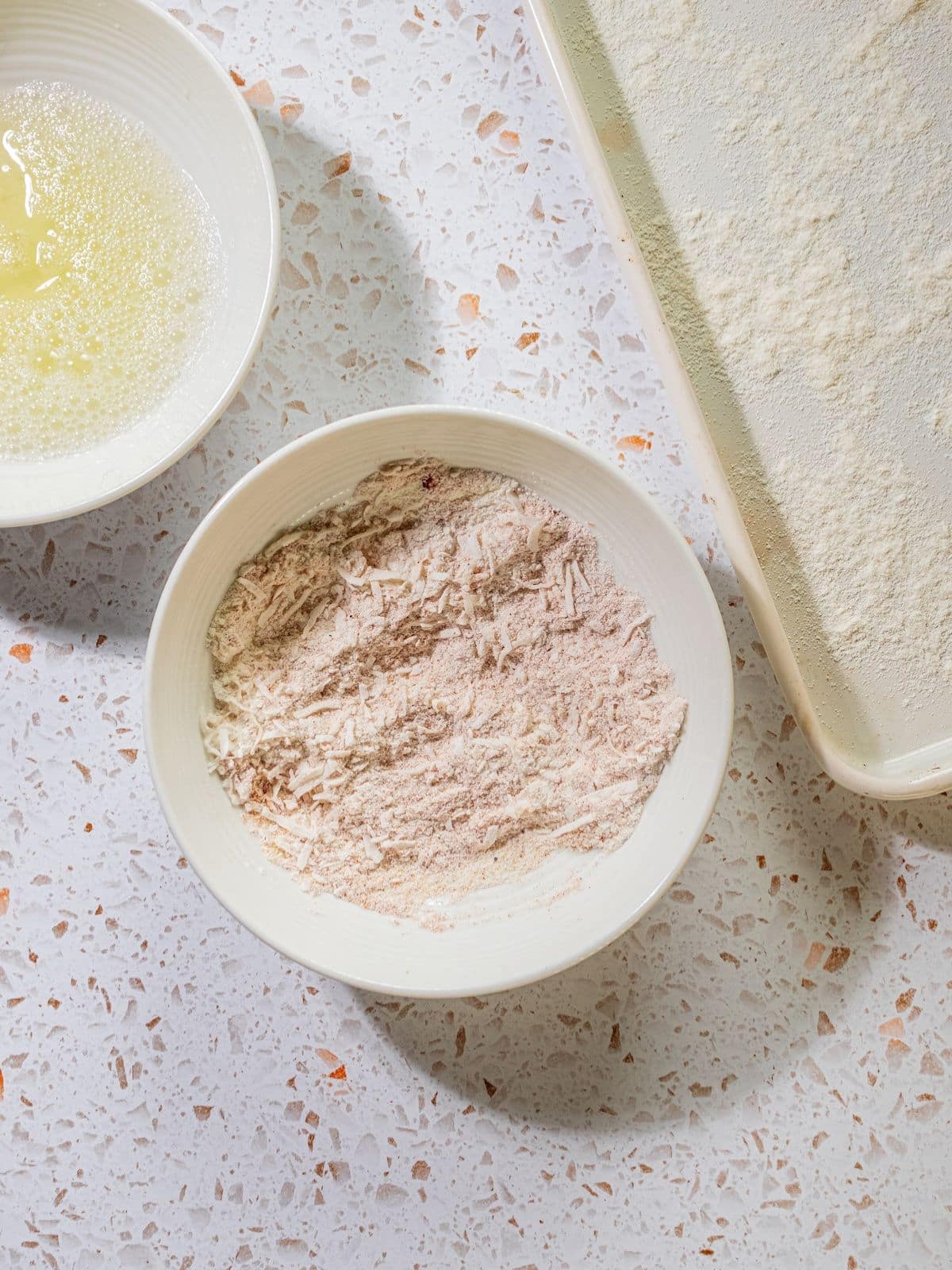
- Step 3: Bread the Shrimp. Whisk the egg white together with water until it turns frothy. Dip the shrimp into the egg whites, then the breading, and then lay them out on your prepared sheet pan. It helps to make an assembly line in this order to keep the process efficient.
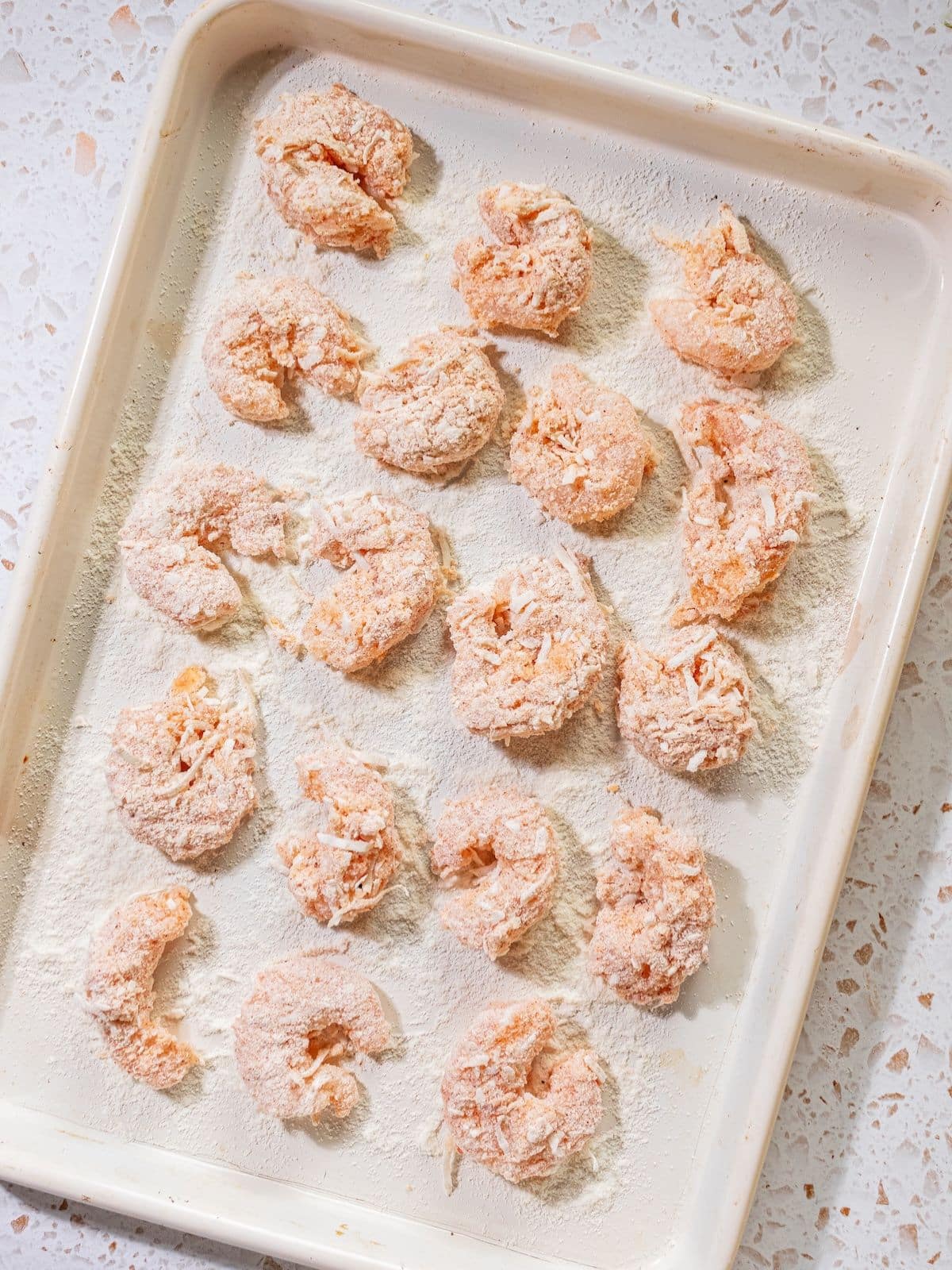
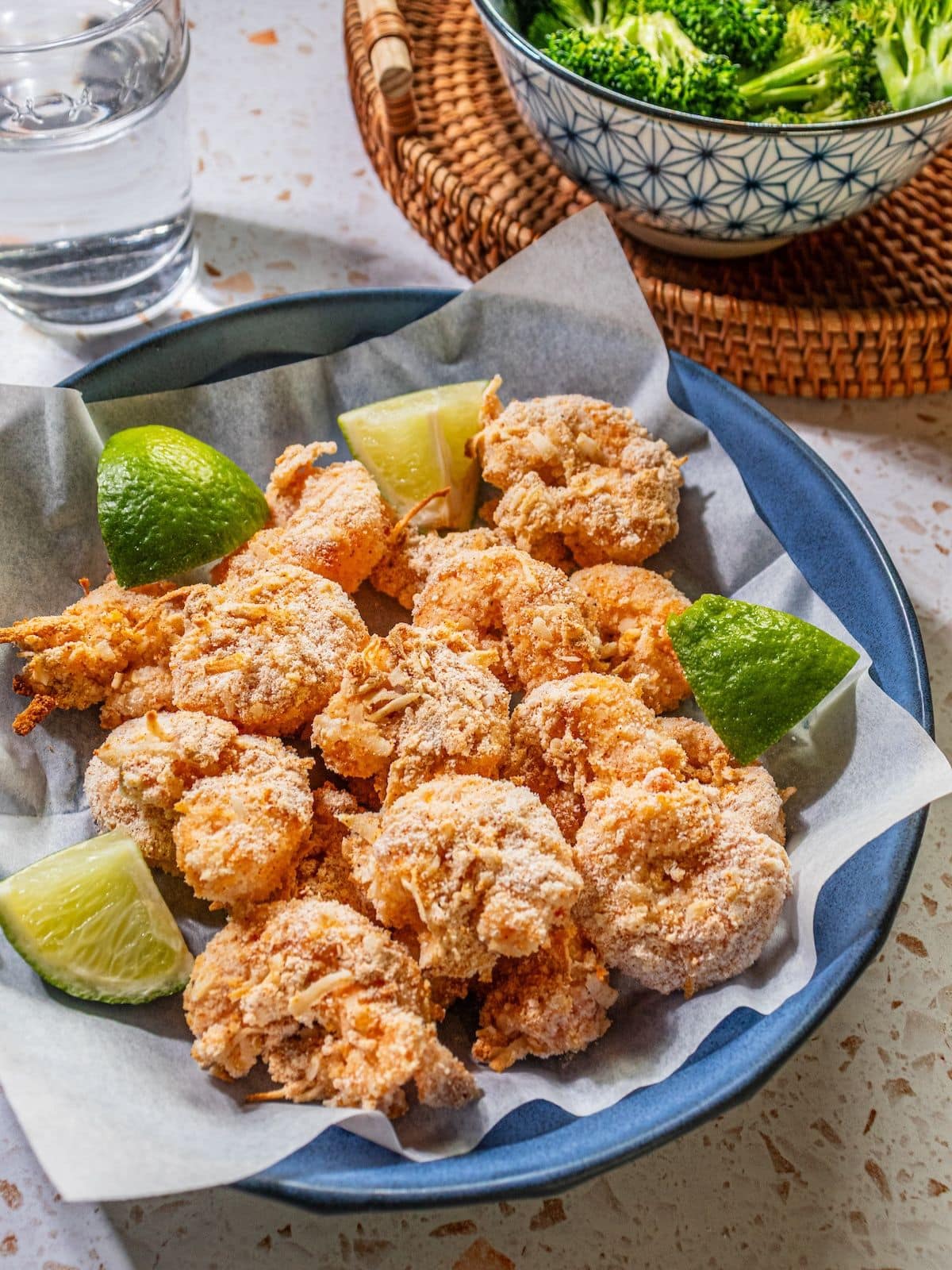
- Step 4: Bake Until Crispy. Bake the breaded shrimp at 350°F until the outside is crispy brown and the shrimp are pink and translucent inside. Enjoy as an appetizer to serve before a bowl of healthy gumbo!
Expert Tips
- Pat Dry Before Breading: It’s important to use a paper towel and pat your shrimp dry on both sides before dipping them into the egg whites. The egg will stick better to dry shrimp, which means the breading will also stick and stay in place more.
- Sift the Flour: Coconut flour can clump, so be sure to sift it before mixing up your breading to keep the texture and get rid of clumps.
- Fully Cook the Shrimp: Shrimp changes color from gray and white to pink and translucent when fully cooked. You can also use a meat thermometer to ensure it reaches an internal temperature of 145°F. On the flip side, don’t overcook the shrimp beyond 145°F or it will turn tough and rubbery.
Storage Directions
- Storing: Keep leftovers in an airtight container in the refrigerator for up to 3 days. I do not recommend freezing this shrimp, as the breading will be soggy and the shrimp’s texture will change.
- Reheating: Reheat your leftover shrimp on a baking sheet in the oven at 350°F for 5-8 minutes. You can also reheat them in the air fryer at 375°F for 3-4 minutes. Do not reheat them in the microwave because they will be soggy.
- Make Ahead: You can bread the shrimp and refrigerate them for up to 2 hours before baking. This is great for a dinner party or holiday prep!
Serving Suggestions
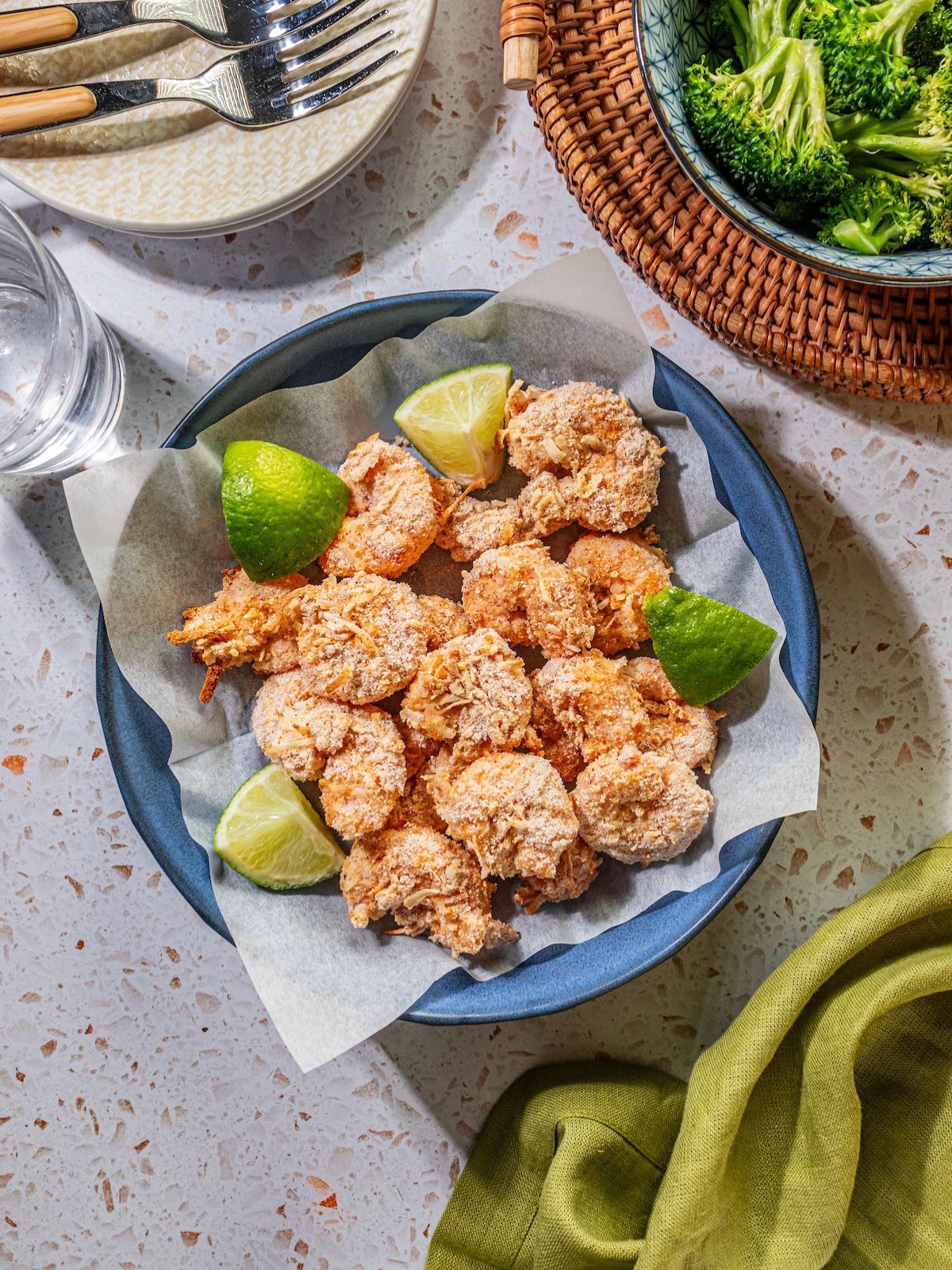
This easy coconut shrimp recipe is the perfect easy dinner for a busy weeknight, a fun weekend meal, or an appetizer for your next dinner party. It’s the perfect balance of sweet, spicy, and savory with a great crunch! It tastes just as good as fried shrimp, but it’s better because it’s better for you!
- Create a full, but simple meal by serving this shrimp with a side of sweet potato salad and a veggie or a serving of low-calorie pasta salad.
- Dipping fried shrimp into a variety of fun sauces is one of the most fun ways to enjoy them. Make sauces that are sweet and spicy, like a mango and Chamoy dip or apricot jam and sriracha. My Greek yogurt salsa dip or healthy Ranch dressing is are great creamy options.
Baked Coconut Shrimp Recipe FAQs
This is a great air fryer recipe! Air fry the coconut shrimp at 375°F for 6-8 minutes until they are golden brown and the shrimp is cooked through. Be sure to flip the shrimp halfway through for even frying on both sides.
Yes, you can use frozen shrimp for this coconut shrimp, but you’ll need to thaw the shrimp in the refrigerator for 24 hours before patting it dry and breading it.
Usually, the coating doesn’t stick because the shrimp is wet. This causes the egg white to dilute and drip off, taking the coating with it. Be sure to pat the shrimp dry before breading it to avoid this.
More Low-Calorie Shrimp Recipes
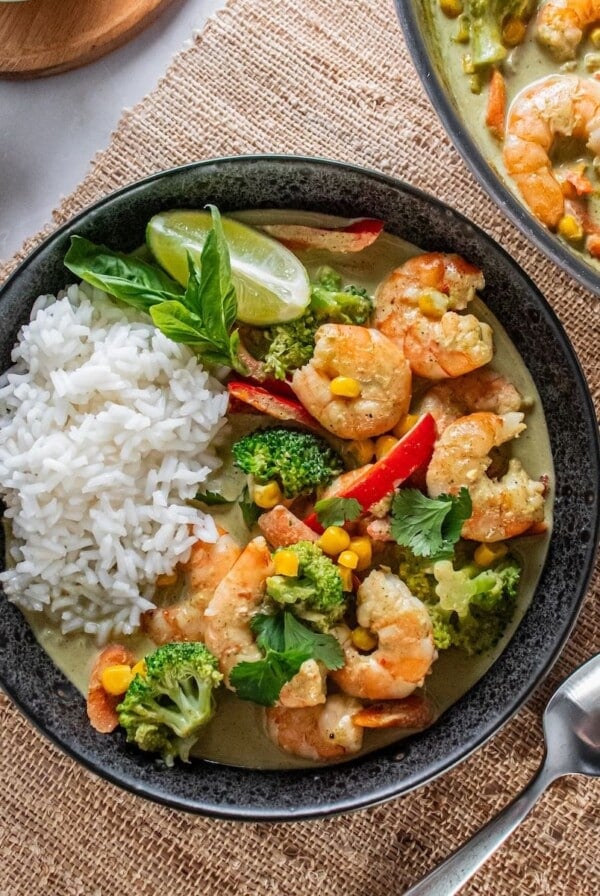
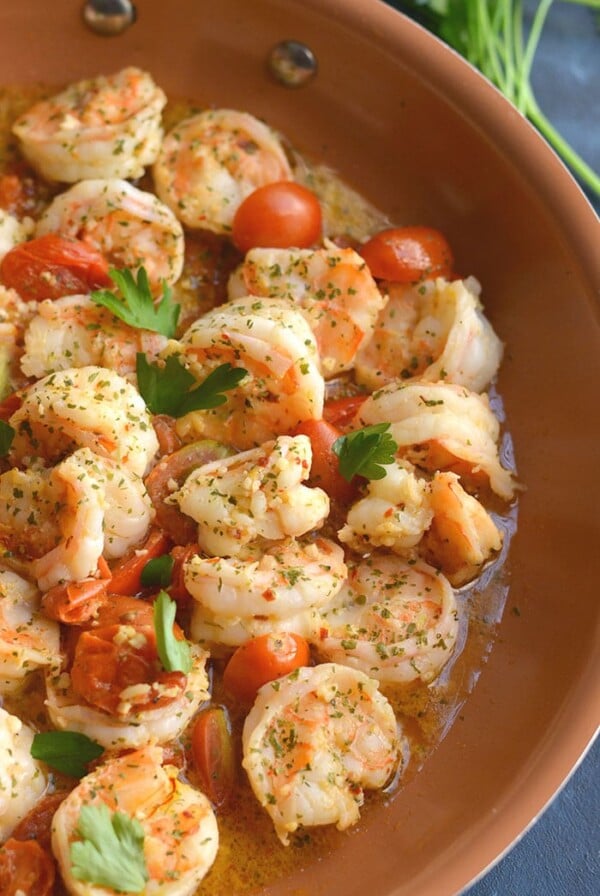
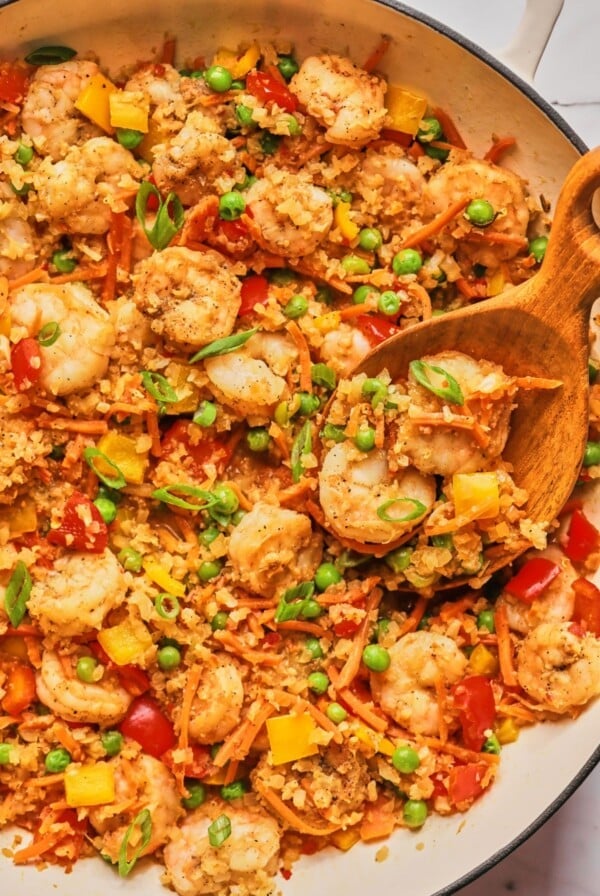
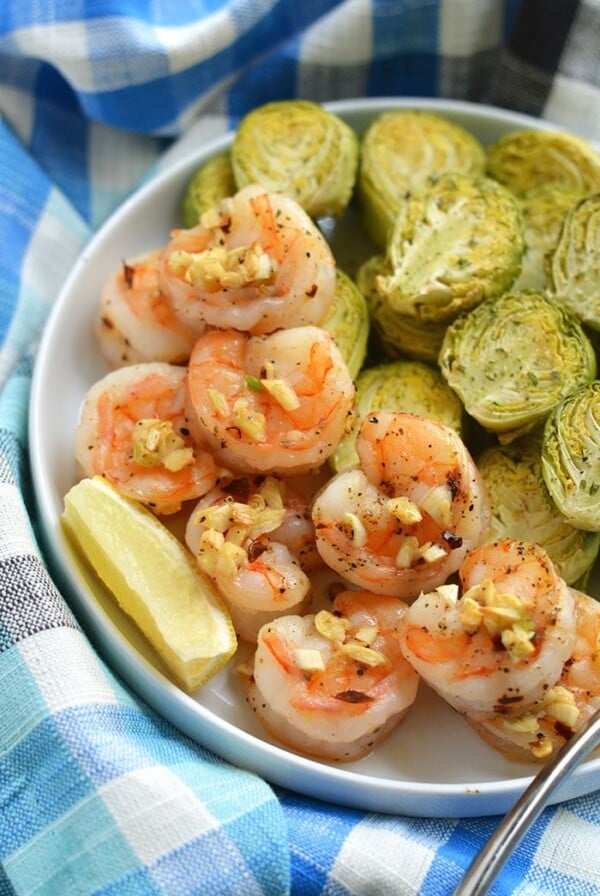
If you tried this Baked Coconut Shrimp recipe or any other recipe on my website, please leave a 🌟 star rating and let me know how it went in the 📝 comments below.
Baked Coconut Shrimp
Ingredients
- 18 large Shrimp, deveined with tail removed
- 1 Egg White
- 2 tablespoons Water
- ⅓ cup Coconut Flour , plus more for dusting the pan
- ⅛ cup Unsweetened Coconut Flakes
- ½ teaspoon Garlic Powder
- ½ teaspoon Paprika
- ¼ teaspoon Cayenne Pepper
- Salt and pepper to taste
Instructions
- Preheat oven to 350 F. Prepare a nonstick baking sheet by dusting it with a light layer of coconut flour. This is so the bottom of the shrimp stays breaded during the cooking process and helps with cleanup!
- In a bowl sift together the coconut flour, shredded coconut, garlic powder, paprika, canned pepper, salt and pepper until blended well.
- In a separate bowl, whisk the egg white together with the water until frothy. Make an assembly line with the egg white bowl, flour bowl and sheet pan.
- Dip one of the shrimp in the egg wash, then immediately in the flour, coating it generously with the mixture. Place the shrimp on the sheet pan. Repeat the process until all shrimp are breaded.
- Bake 15 minutes until crispy brown. Remove from the oven and serve immediately with a vegetable and another side for a complete meal.
Video
Notes
- Pat the shrimp dry using a paper towel to ensure the egg white and breading stick to it.
- Sift the coconut flour to ensure it’s free from clumps.
- Shrimp turns pink and translucent when it is fully cooked. You can also use a meat thermometer to check the internal temperature reaches 145°F.
Nutrition
Nutrition information is automatically calculated, so should only be used as an approximation.








I was absolutely impressed with this recipe! Very simple and tasted fantastic. Thank you!
Hi! I’m very excited to try this recipe. I was wondering if it would be possible to use whole wheat flour instead of coconut flour in this recipe? Thanks in advance!
I actually have not tried this with whole wheat flour. I have a gluten allergy so I do not cook with gluten. I do know that coconut flour requires a lot of egg so I am guessing if you were to use whole wheat flour or any other flour you would need to adjust the eggs somehow.